
What Is Tunneled Catheter Insertion for Kidney Dialysis?
Tunneled catheter insertion is a medical procedure used to provide reliable vascular access for patients who require hemodialysis due to kidney failure. A tunneled dialysis catheter is a soft, flexible tube placed into a large vein, usually in the neck, with part of the catheter passing beneath the skin before exiting through the upper chest. It allows blood to travel between the patient's body and a dialysis machine for filtration.
Why Is a Tunneled Dialysis Catheter Needed?
When the kidneys cannot effectively remove waste products, excess fluids, and toxins from the blood, hemodialysis may become necessary. A tunneled catheter provides access to the bloodstream when an arteriovenous fistula or graft is unavailable, unsuitable, or not yet ready for use.
This type of dialysis access may be recommended for patients requiring dialysis over several weeks or months. However, an arteriovenous fistula or graft is generally preferred for long-term hemodialysis when medically appropriate because catheters carry higher infection and clotting risks.
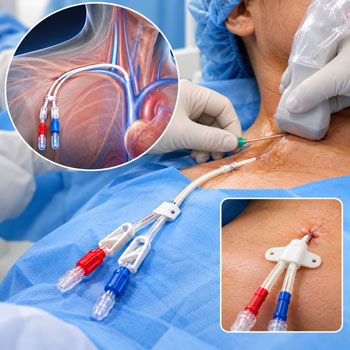
How Is Tunneled Catheter Insertion Performed?
During tunneled catheter insertion, the healthcare team cleans and prepares the insertion area using sterile techniques. Local anesthesia is administered to reduce discomfort, and additional sedation may be provided when appropriate.
The doctor accesses a large central vein, commonly the internal jugular vein, and guides the catheter into position. A small tunnel is created beneath the skin, allowing the catheter to exit through the chest. A cuff positioned beneath the skin helps secure the catheter as surrounding tissue heals. Imaging is used to guide placement and confirm the catheter's position.
Benefits of a Tunneled Catheter for Dialysis
A tunneled dialysis catheter provides immediate or prompt access for hemodialysis after correct placement and clinical clearance. It eliminates the need for repeated needle insertion into the dialysis access during each treatment session. It can also serve as temporary access while a permanent dialysis fistula or graft develops.
Risks and Care After Catheter Insertion
Possible complications include catheter-related bloodstream infections, bleeding, blood clots, catheter blockage, and problems with blood flow. Patients should keep the catheter dressing clean and dry, avoid pulling or twisting the tubes, and follow their dialysis team's instructions.
Fever, chills, redness, swelling, discharge, or pain around the catheter site require prompt medical attention. Regular catheter care and monitoring help reduce complications and maintain effective dialysis access.
Consult a Kidney Specialist
Patients with advanced chronic kidney disease or kidney failure should discuss suitable dialysis access options with a nephrologist. The choice depends on kidney function, vascular health, treatment requirements, and overall medical condition. Proper evaluation and timely follow-up support safer, more effective hemodialysis treatment.